Paint by Numbers Difficulty Levels, Decoded: Choosing Your Next Kit
Roth Miklós
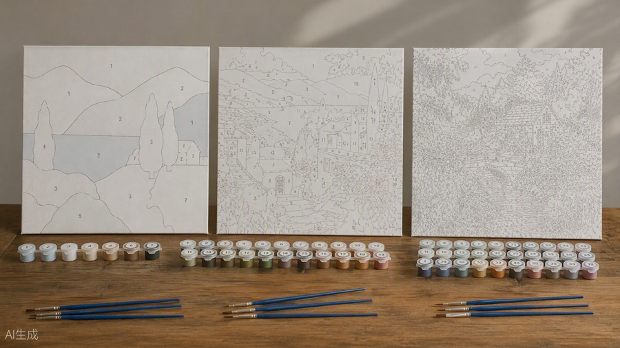
When a paint-by-numbers kit ends up abandoned in a drawer, lack of talent is rarely to blame. It is a mismatch: a painter picks a gorgeous, densely detailed design, spends three evenings on one square centimetre of foliage, and quietly gives up. Difficulty selection is the single decision that determines whether the hobby sticks — and the least explained part of most webshops. This article decodes the criteria behind difficulty ratings, using the five-level scale published by Hungarian manufacturer Festede as a concrete example, as laid out in this guide to paint-by-numbers difficulty levels.
Criterion one: the numbered area count
Difficulty in paint by numbers is not about artistic skill — the numbers handle composition. The most objective metric is the segment count: how many numbered regions the canvas is divided into. Festede's published scale runs from "very easy" designs with roughly 0–500 numbered areas to "very hard" designs exceeding 2,500. More segments means smaller segments, and smaller segments mean finer brushes, steadier sessions and more hours to completion. A Hungarian-language decoding of the difficulty levels presents the same five rungs for local readers, from a first kit to a genuinely demanding one.
Criterion two: colour count and blending
A 20-colour design reads very differently from a 40-colour one. Adjacent segments in near-identical shades — the technique that creates realistic skin tones and skies — demand more attention per session than bold, clearly separated blocks of colour. Two kits with identical area counts can feel a level apart because of palette alone, a point the reviewed Hungarian analysis of the difficulty scale makes explicitly.
Criterion three: where the detail sits in the subject
Portraits and animal faces concentrate tiny segments in expressive areas; landscapes and graphic designs spread larger, forgiving shapes across the canvas. When comparing kits, ask where the small cells are clustered: dense detail in a background is tedious, dense detail in a face is the entire point. The Hungarian guide to choosing a first kit offers a quick visual test — if you cannot distinguish the individual numbered areas in the product preview, the kit is probably too detailed for the painter you are buying for.
The five levels, rung by rung
Presented as the shop's own system — other brands scale differently, but the logic transfers:
- Very easy (about 0–500 areas). Large segments, bold shapes; ideal for children, seniors, and adults who want a finished canvas in two or three relaxed sessions. The sensible choice for a first-ever kit at any age.
- Easy (roughly 500–1,000 areas). The sweet spot for gift-buyers unsure of the recipient's patience — a weekend project with visible progress every evening.
- Medium (roughly 1,000–1,500 areas). For returning painters who finished an easy kit and want more realism without a month-long commitment.
- Hard (roughly 1,500–2,500 areas). Detailed fur, fabric, foliage; expect multiple weeks of regular sessions. Rewarding only if you already know you enjoy the hobby's rhythm.
- Very hard (2,500+ areas). Effectively a long-form art project. Choose it for yourself only after completing a hard kit — or for a recipient you have watched finish one.
A beginner-oriented English guide to a first numbered canvas reaches the same conclusion from the technique side: brush control and paint handling are learned fastest on forgiving, large-segment designs.
Do custom photo kits follow the same rules?
Yes — and this is where criteria one and three collide. Festede produces custom kits from the customer's own photo, with minimum resolution requirements and a design proof sent for approval before production. A close-up portrait against a clean background converts into a manageable design; a group photo of eight people at a wedding becomes a sea of tiny face segments. The explainer on how AI-assisted design turns a photo into a kit describes the conversion pipeline; from a difficulty perspective, simpler source photos translate into kinder levels. If you are ordering a custom kit as a gift, choose the source image accordingly.
Choosing your next kit
Three filters, in order. First, your history: the level above the last kit you actually finished — not the one you admire. Second, your calendar: hard and very hard kits assume weeks of regular sessions, so buy for the evenings you really have. Third, your tolerance for fine detail: portraits concentrate it, landscapes spread it. The shop's 50-day money-back or exchange guarantee, per its FAQ, removes most of the risk from gifting at an uncertain level, and kits observed in a roughly 9,000–18,000 Ft range make starting easy a cheap experiment. Pick the level that guarantees a finish — the 2,500-area masterpiece will still be there in the spring.
This is a heading
To edit this subheading, highlight the text and replace it with your own fresh content.
This is a paragraph. To edit this paragraph, highlight the text and replace it with your own fresh content. Moving this text widget is no problem. Simply drag and drop the widget to your area of choice. Use this space to explain the services you offer and why they’re perfect for your audience.
© Copyright Brikettgyartas