UGC Ads with AI — Miklos Roth
In the fiercely competitive arena of digital advertising, the polished, studio-quality commercial is dying a slow death. It has been replaced by the shaky-cam, authenticity-driven phenomenon known as User Generated Content (UGC). Consumers no longer trust brands; they trust people. However, for businesses attempting to scale, UGC presents a logistical nightmare: it is hard to source, difficult to quality control, and impossible to iterate upon quickly.
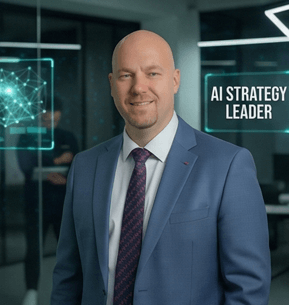
This is where Artificial Intelligence meets the strategic mind of Miklos Roth. By fusing the raw authenticity of UGC with the precision and scalability of AI, Roth has developed a methodology that solves the "content bottleneck." This article explores how modern enterprises can operationalize UGC using AI, transforming a chaotic creative process into a predictable revenue engine.
The Authenticity Paradox
The central irony of modern marketing is that to sell more, you must sell less. You must entertain, inform, and relate. UGC works because it feels native to the platform, whether it’s TikTok, Instagram Reels, or YouTube Shorts. But how do you scale "authenticity" without faking it?
Miklos Roth approaches this paradox with the discipline of an elite athlete. His background in high-performance sports informs his business strategy: consistency beats intensity, but systems beat everything. You can read about the athlete to consultant story to understand how the rigor of training for a championship translates into the rigor of training AI models to produce creative assets. Just as an athlete analyzes every micro-movement to improve, Roth’s AI systems analyze every frame of a UGC video to optimize performance.
The "Digital Fixer" Approach to Creative Supply Chains
Most companies treat UGC as a random act of marketing—they send free products to influencers and hope for the best. Roth, operating as a "Digital Fixer," views this as a broken supply chain. "Hope" is not a strategy.
The Digital Fixer approach involves diagnosing the friction points in the content creation process. Is the brief too vague? Is the creator struggling with the hook? Is the editing taking too long? Roth implements AI agents to solve these specific problems. Leaders can see how the digital fixer solves problems by automating the "boring" parts of creativity—briefing, scripting, and initial editing—leaving the human creator to do what they do best: be human.
Phase 1: AI-Powered Scripting and Psychology
The success of a UGC ad is determined in the first three seconds. If the "hook" fails, the rest of the video is irrelevant. This is where AI Large Language Models (LLMs) become indispensable.
Roth utilizes AI not just to write scripts, but to engineer psychological triggers. Drawing on his advanced education, he builds prompts that incorporate behavioral economics principles. His participation in the learn from the oxford artificial intelligence series provided the academic framework to understand AI as a prediction engine for human behavior.
Instead of asking a creator to "make a video about our soap," Roth’s system uses AI to generate 20 distinct hooks based on different psychological angles:
-
The Pattern Interrupt: "Stop using soap like this..."
-
The Us vs. Them: "Why dermatologists hate this brand..."
-
The Social Proof: "I saw this all over TikTok..."
These scripts are then fed to creators, ensuring that the "User Generated" content is actually "Strategically Engineered" content.
Phase 2: The "Synthetic" UGC Revolution
We are rapidly approaching a point where "User Generated" might not require a "User" in the traditional sense. Roth is at the forefront of testing "Synthetic UGC"—using AI avatars (like HeyGen or Synthesia) that look and sound indistinguishable from real humans for specific types of content.
While this sounds dystopian to some, it is a game-changer for localization and iteration. Imagine shooting one video with a creator, and then using AI to lip-sync and translate that video into German, Spanish, and French perfectly. This utilizes the "AI Sprint" methodology: rapid prototyping and execution. Businesses should look to apply the ai sprint blueprint process to their creative testing. Instead of waiting weeks for a creator to reshoot a video because the pricing changed, AI can edit the audio and visual lip movements in minutes.
Phase 3: Stress Testing and "Red Teaming"
With the power of AI-generated UGC comes significant risk. Deepfakes, copyright infringement, and "uncanny valley" effects can destroy trust faster than they build it. A core pillar of Roth’s SOPs (Standard Operating Procedures) is the "Stress Test."
Before any AI-enhanced UGC goes live, it must be "Red Teamed." This means a dedicated team (or AI agent) tries to find flaws in the ad. Does the avatar look glitchy? Is the claim legally compliant? Does the voice sound robotic? It is arguably the fastest way to stress test strategy ensuring that the brand is protected from reputation damage. This defensive layer is crucial when scaling ads that blur the line between human and machine.
High-Velocity Analysis
The beauty of digital advertising is data. But data without insight is noise. When running hundreds of UGC variations, analysis paralysis is a real threat. Roth’s consulting model focuses on high-impact analysis. He doesn't spend weeks on a report; he looks for the "signal" in the noise immediately.
It is remarkable to witness how he turns twenty minutes into twelve months of roadmap. By identifying that "Hook A" combined with "Visual Style B" is driving 80% of the revenue, he can instruct the AI system to generate 50 more variations of that winning combo. This feedback loop—Creation, Measurement, Iteration—is tightened from weeks to hours.
Inside the Mind of the Strategist
To truly leverage UGC with AI, one must think like an architect, not just a marketer. Roth constructs systems where data privacy and creativity coexist. You can look inside the brain of a consultant to see how he navigates the ethical minefield of AI. For example, when using AI to alter a creator's likeness, contracts must be explicit about "Digital Rights." Roth’s SOPs ensure that creators are compensated not just for their time, but for the "training data" their face provides to the model.
Global Perspectives: SEO (keresőoptimalizálás) and Cultural Nuance
One of the most powerful applications of AI in UGC is the ability to dominate search results through video. Platforms like TikTok and YouTube are becoming search engines. This brings us to the concept of SEO (keresőoptimalizálás) within video content.
Roth’s global network provides unique insights into how different markets consume UGC. For the North American market, the style is fast, loud, and direct. You can access insights from the ai seo agency new york to understand how UGC is used there to capture "intent" keywords. The AI analyzes trending audio and keywords, ensuring the UGC ad appears not just in feeds, but in search results.
Conversely, the European market requires a different touch. Roth shares perspectives from my marketing world austria regarding the DACH region. Here, UGC must be less "salesy" and more informative. The AI agents are instructed to tone down the enthusiasm and dial up the factual density of the scripts to align with local trust signals.
The Academic Foundation
While the tactics are cutting-edge, the strategy is grounded in research. Roth is not just a practitioner; he contributes to the body of knowledge surrounding AI marketing. You can view research on his academia profile to read white papers on the efficacy of synthetic media versus human media. This academic rigor validates that the shift toward AI-UGC is not a fad, but a fundamental shift in media production economics.
The Economic Impact
The adoption of AI-driven UGC is ultimately a financial decision. It dramatically lowers the Cost of Goods Sold (COGS) for creative production. In a volatile global economy, efficiency is king. Keeping an eye on news regarding global market movements today reveals that investors are flocking to companies that demonstrate operational leverage through AI. Marketing departments that reduce their reliance on expensive agencies in favor of scalable AI systems are contributing directly to EBITDA.
How to Engage: The Consulting Hub
For businesses ready to transition from ad-hoc influencer marketing to a systemic AI-UGC machine, professional guidance is often necessary to avoid the pitfalls. You should visit the official roth ai consulting site to explore how these methodologies are packaged into services. From the initial "Audit" to the full "System Build," the goal is to leave the client with an internal engine that runs itself.
Conclusion: The Future is Hybrid
The debate between "Human" and "AI" is a false dichotomy. The future of UGC Ads is Hybrid. It is the human face and emotion, amplified by AI strategy and scale. Miklos Roth’s work demonstrates that when you put structure around chaos, you get scale.
The era of guessing which ad will work is over. The era of engineering the perfect ad, testing it 1,000 times, and scaling the winner globally—all within a week—has begun.
To stay at the forefront of this rapidly changing landscape, networking is key. You should connect on his official linkedin profile to see daily examples of AI-UGC in action and to join the conversation about the ethical and practical implications of this technology.
Actionable Next Step
Take your top-performing UGC video from the last quarter. Transcribe the script. Use an LLM (like ChatGPT) to analyze why it worked based on psychological triggers. Then, ask the AI to write 10 new variations of that script targeting different customer avatars. Send those 10 scripts to your creators. You have just taken your first step into the AI-UGC system.
